Playful Computing Conference Digital Brochure

Friday 26th June, University of Westminster - Harrow Campus

Please note: if you have parked your car, please register your numberplate with University Reception

Agenda, session and speaker information

9.00 - Teacher meet & greet in Exhibitor Area

10.00 - Auditorium - Welcoming address & opening Keynote

10.45 - Session 1 (choice of four sessions)

Digital
Creativity

Auditorium

In an era defined by rapid technological change, educators face a deceptively simple but profoundly urgent question: what are we actually teaching when we teach with digital tools? This keynote argues that the thinking behind the tools matters more than the tools themselves, and that the most enduring gift an educator can give a student is not fluency in any particular platform, but the creative confidence and critical capacity to work purposefully across whatever tools the future demands. I argue for a fundamental reorientation of how digital creativity is understood and taught. Rather than positioning the classroom as a space for tool acquisition, I propose a vision of it as a creative studio. A dynamic, expansive environment that may be physical, digital, or hybrid, and that foregrounds creative process over technological output.

Dr Doug Specht is a Chartered Geographer, a Reader in Cultural Geography and Communication, and Head of the School of Media and Communication at the University of Westminster. His research explores themes related to environmental justice, human rights, and access to education, with a focus on the production and codification of knowledge though cartographic artefacts and in educational settings. In recognition of his work, he has been appointed as a Chartered Geographer and Chartered Teacher.

Careers 
Pathways
Room: LT2

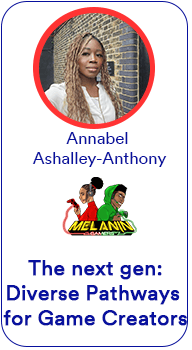
Annabel Ashalley-Anthony is an winning gaming consultant and the founder of Melanin Gamers. She brings over seven years of industry experience to the table. Having collaborated with triple A studios like EA, double A studios such as Splash Damage, and various indie developers. Annabel specialises in crafting high-impact strategies that help studios scale and diversify both their workforces and projects. Melanin Gamers' notable achievements include the 2025 Cannes award-winning “The Watch” campaign with Leo Burnett, which was globally recognised for its pioneering advancements in online safety.

Cost-Free Computing

Room: LT1

This hands‑on workshop introduces participants to creative and engaging computing activities using BBC micro:bits, with a strong emphasis on cost‑free and low‑cost approaches that can be easily applied in the classroom.

Participants will take part in a practical activity to create “box monsters” using micro:bits alongside simple, everyday materials. The workshop demonstrates how physical computing and creativity can be combined effectively without the need for expensive equipment or specialist resources.

Tony Gilbert plays a pivotal role in digital education as the Curriculum Manager for Digital and Professional at New College Swindon. As the Digital Schoolhouse & Cyber First Lead, he combines over 14 years of expertise in computing education with a passion for advancing digital skills. Tony teaches a variety of courses, including Software Development, Web Development, and Physical Computing, and actively supports professional growth through CPD sessions in Computer Science. Recognised for his exceptional contributions, he frequently writes, presents at industry events, and contributes to discussions on educational technology.

Responsible Computing

Room: EMS

Already dabbled with LLMs and ready to go deeper? This session explores how to shift from cautious experimenter to confident collaborator - using LLMs as a critical thinking partner, creativity booster, and workflow enhancer (not just a terrible PA or untrustworthy copywriter). If you ever feel like using LLMs in your daily tasks is 'cheating' or 'outsourcing effort', this workshop will change your mind. 

Mark ‘MrC’ Calleja is an Informal Learning Manager at the Raspberry Pi Foundation, where he helps turn coding education into something suspiciously close to fun.

A two-time TEDx speaker on teaching young people to hack and former host of Digital Making at Home, Mark designs learning experiences that prioritise play, experimentation, and the radical idea that learners should enjoy themselves. He believes schools should feel more like video games: clear goals, meaningful choices, fast feedback, and absolutely no grinding for no reason.

11.30 - Break and transition

11.45 - Session 2 (choice of four sessions)

Digital
​Creativity

Room: PC Room

Flock XR is a free, open-source platform that enables young people to build interactive 3D worlds using block-based coding. Designed by Flip Computing, an inclusion-first technology education company, it bridges the gap between beginner tools such as Scratch and professional 3D development platforms including Blender, Unity and Unreal Engine.


Flock XR supports the growing focus on creativity and digital skills highlighted in the Curriculum and Assessment Review recommendations. By combining coding with storytelling, design and world-building, learners develop computational thinking skills such as sequence, selection, repetition and variables through imaginative projects.


In this hands-on workshop, participants will explore how learners can create immersive 3D experiences while developing core computing knowledge. We will share examples from school pilots and provide practical ideas for bringing more creative and inclusive approaches into computing education. 

Dr Tracy Gardner is a tech leader, software tool developer, computer science researcher and educator. Rebecca Franks is an experienced computing teacher and leader. Rebecca and Tracy are co-founders of Flip Computing, an inclusion-first technology education company. Flip Computing has developer Flock XR, a free 3D creation tool for young people. 

Careers 
Pathways

Auditorium

James Butcher has been working for Epic games for seven years his current role is Education Development Manager focusing on post secondary Education. He has a history of working in education and training, having previously helped establish the licensee training department at Epic and as a Senior Lecturer in Higher education. He has also worked as a unreal generalist and artist within the video game industry. James has been working with Unreal Engine for over 15 years both as a hobbyist and professionally.

Cost-Free Computing

Room: EMS

Calling all Secondary and A-Level CS teachers! Join us to find out more about how Ada Computer Science can support your classes. 

We’re showcasing our brand-new Web and SQL integrated projects—perfect for NEA support or extended classroom tasks. Plus, see our class management tools in action: learn how to set up classes, set quizzes and practice questions and then review the progress your students are making.

Laura Holborow is a Senior Learning Manager at the Raspberry Pi Foundation with over 15 years of experience in computing education. She leads teams that design and deliver innovative curriculum resources to empower teachers and inspire learners. Passionate about equity in tech, Laura is dedicated to encouraging and supporting underrepresented groups to explore computing and pursue creative, digital projects.


Alex Parry is Learning Manager at the Raspberry Pi Foundation, where he has worked for over six years. He holds an MA in Computing in Education and works on Ada Computer Science, the UK Bebras Challenge, and STEM SMART in partnership with the University of Cambridge. 

Responsible Computing

Room: LT1

Computing teaching often draws on, or supports, other subjects, whether maths, biology, history or ethics, but how to do this well? Autonomy tours are a simple, visual analysis technique that supports reflection on how to improve teaching that crosses knowledge domains. We will use a playful unplugged activity called brain-in-a-bag, teaching what neural networks are by drawing from biology, to illustrate the approach.
Paul Curzon is a Professor of Computer Science at Queen Mary University of London. He has run the public engagement project ‘Computer Science for Fun’ (cs4fn.blog) for 20 years as well as its sister project Teaching London Computing (teachinglondoncomputing.org) supporting teachers with free resources. He was awarded an international prize “For outstanding contributions to the rebirth of computer science as a school subject.” and has co-authored two books: “The Power of Computational Thinking” and “Conjuring with Computation”.


12.30 - Lunch, Exhibitor Space & Networking

13.30 - Session 3 (choice of four sessions)

Digital 
​Creativity

Auditorium

In this session, we will present a sequence of concrete and practical programming projects and examples ready to be used in your programming classes. The sequence is designed to be engaging and stimulate creativity, incorporating graphics, animation and sound from the beginning. It is aimed specifically at the difficult early phase of Python programming. 

At the same time, the project sequence is designed with sound pedagogical principles in mind, forming a comprehensive introduction to Python programming concepts. 

The projects are enabled by the Strype Python environment, a free, browser-based educational IDE. 

Michael Kölling is a Professor at the Department of Informatics at King’s College London, UK. Michael’s research interests are in the areas of object-oriented systems, programming languages, software tools, computing education and HCI. He has published numerous papers on object-orientation and computing education topics and is the author and co-author of two textbooks. Michael is the lead developer of BlueJ and Greenfoot, two educational programming environments. He is a UK National Teaching Fellow, Fellow of the UK Higher Education Academy, Oracle Java Champion, and a Distinguished Educator of the ACM. 

Careers 
Pathways

Room: LT1

What if the biggest barrier to careers in engineering and technology isn’t talent - but confidence?

In this practical and thought-provoking keynote, Hayley explores how our language, assumptions, and confidence can unintentionally shape which children see engineering and technology careers as “for people like me.”

Drawing on personal and classroom experiences, Hayley shares practical strategies to help educators widen participation into future careers - especially for children who may never have considered themselves “technical.”

Attendees will leave with actionable ideas to:

- build confidence around engineering and technology pathways

- challenge stereotypes that limit career aspirations

- make STEAM careers feel more creative, accessible, and relevant

- support more diverse future talent pipelines through everyday interactions

Because expanding career pathways into engineering and technology doesn’t start at application stage.

It starts much earlier - with confidence, belonging, and the belief that “this could be for me."

Hayley Laidlaw-Wilson is the founder of Sniff and Snails, a multi-award-winning EdTech company inspiring children to explore technology through creativity, storytelling, and hands-on making.

Alongside building Sniff and Snails, Hayley has spent more than 25 years working in technology consulting with organisations including Accenture, Capco, and Publicis Sapient.

Her work bridges industry and education, helping children, teachers, and families see computing as a space for imagination, creativity, and belonging.

In 2025, Hayley was recognised by Small Business Britain’s f:Entrepreneur campaign as one of the UK’s top female entrepreneurs for her contribution to diversity and inclusion in technology.

A mum of two, Hayley credits her children as her “best testers.” When she is not in a boardroom or speaking on stage, she is usually in her workshop building the next Craft + Code creation - earning her the nickname “Szalinski”. Thankfully, unlike Honey, I Shrunk the Kids, she hasn’t shrunk her children… yet.

Cost-Free Computing

Room: EMS

A practical workshop for secondary Computer Science teachers exploring how unplugged problem-solving tasks can develop computational thinking and reveal students’ problem-solving strengths.

You’ll be introduced to Bebras, an international challenge used by over 525,000 UK secondary students in 2025, and learn how its tasks can be used beyond the competition to engage, support, and stretch every learner.

Harriet Page is a Learning Manager at the Raspberry Pi Foundation. With extensive computing education experience, Harriet supports content development for the Ada Computer Science platform. She also supports the development of tasks for the Bebras challenge and Coding challenge.

Responsible Computing

Room: LT2

With AI becoming more accessible and common in children's online lives, it's important they have the skills to navigate it all. In this session, you'll learn about the rapidly changing AI landscape and receive tips and resources for developing students' media literacy... even when images or videos are very realistic.

14.15 - Break & Transition

14.30 - Session 4 (choice of three sessions)

Digital
​Creativity

Room: EMS

Discover how to turn the BBC micro:bit into a powerful pocket gaming console! This hands-on workshop will show you how to create engaging, playable games that your students will love.

The micro:bit is an ideal gaming device — featuring physical buttons, an accelerometer for motion control, a 5×5 LED display, a built-in speaker, and the ability to run on batteries for portable play

In this practical session, you'll learn to code classic arcade-inspired games including:

Pac-Man — navigate mazes and collect dots

Space Invaders — defend against alien attacks

Mario Kart — racing action with tilt controls

These projects use Microsoft MakeCode's game engine, with step-by-step guidance on sprite creation, game mechanics, and coding concepts

Perfect for computing teachers looking to bring interactive, creative coding into the classroom. No prior game development experience required — just enthusiasm and a micro:bit! 

Careers 
Pathways

Room: LT1

Responsible Computing

Room: LT2

15.15 - Break & Transition

15.30 - Session 5 (choice of four sessions)

Digital 
Creativity
Room: EMS

Step into the world of game storytelling in this hands-on workshop! Find out how your students can learn about how directors bring video game cut scenes to life through camera angles, character movement, dialogue, and cinematic action. No experience needed — just imagination and a love of games!

Estelle Ashman is the Curriculum Manager at Digital Schoolhouse, where she designs and curates innovative teaching resources for computing education. She also delivers GCSE Computer Science part-time at a local secondary school.

With over 15 years of teaching experience, including as head of department, across all educational phases, from Key Stage 1 to Key Stage 5, and a Masters in Teaching and Learning, Estelle excels in making complex Computer Science concepts accessible and engaging.

Her workshops cover a range of creative topics, from using dodgeball to explore algorithms and AI to teaching binary numbers with Nintendo's Super Mario Maker 2. Estelle is also the lead author of the Macmillan Education Max Computing book series which is being delivered in schools internationally. Passionate about playful learning, she continually strives to inspire both teachers and students in the world of computing.

Career 
Pathways

Auditorium

Cost-Free Computing

Room: ??

Responsible Computing​

Room: LT1

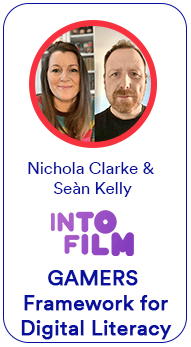
A first look at Into Film’s GAMERS framework, a brand-new game literacy and design tool that helps learners analyse, discuss and create games using a shared 6-pillared structure.

Nichola Clarke is a Learning Lead at Into Film, where she drives screen education initiatives, working with educators and partners to deliver impactful learning programmes that engage young people with film, games, and creative media.

Sean Kelly is a Programme Lead at Into Film, where he supports the delivery and development of film and screen education programmes, working across regional initiatives to engage educators and young people.

16.15 - Exhibitor Space & Networking

18.00 - Close